NETSOL Institute of AI

Big Data Analytics
Techniques

The world's leading brands are powered by NETSOL

Logo 1
Logo 2
Logo 3
Logo 4
Logo 1
Logo 2
Logo 3
Logo 4
Logo 1
Logo 2
Logo 3
Logo 4
Logo 1
Logo 2
Logo 3
Logo 4
COURSE

Introduction

This course is designed to help you gain comprehensive knowledge and hands-on experience in Big data analytics techniques. Through practical labs, real-world projects, and essential theory, you will develop the technical expertise to solve data-driven problems across industries like finance, healthcare, and technology.

  • Apply core mathematical principles—such as linear algebra, probability, and statistics—to support data science and machine learning.
  • Efficiently prepare, preprocess, and analyze data using Python libraries like NumPy and Pandas to build high-performance models & produce insightful visualizations.
  • Implement and fine-tune supervised and unsupervised learning algorithms to address a wide range of real-world challenges.
  • Process and extract valuable insights from textual data using modern natural language processing techniques.
  • Design, build, and optimize deep neural networks with tools such as TensorFlow & Keras, while exploring advanced deep learning strategies.

What you will learn?

Build scalable data pipelines Learn to manage and process large datasets using the Hadoop ecosystem.
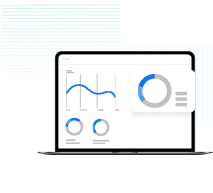
Process big data efficiently Use Spark and MapReduce for fast, distributed data processing.
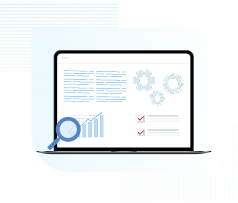
Master NoSQL databases Work with MongoDB, Cassandra, HBase, Neo4j, and Redis.
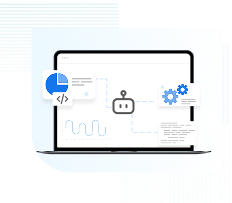
Apply machine learning at scale Build predictive models using Spark MLlib on large datasets.
Solve real-world analytics problems Analyze real datasets through hands-on projects and case studies.
Skillset you will acquire

Big Data ecosystem
& Hadoop

Distributed data
processing

NoSQL database
management

Data engineering
& analytics

Machine learning
at scale

Data mining & business
intelligence

Soft skills overview

Master communications, collaboration, and problem-solving skills required for modern tech roles.
Practical experience in professional environments via mock interviews and real-world scenarios.
Learn how to effectively present and collaborate in team environments.

Eligibility & pre-requisites

To succeed in this course, students should have the following foundational knowledge and skills:

Open to final-year and graduate students of BS/BE: Computer Science, IT, Information Systems, Software Engineering, Computer Engineering, AI, Data Science, and related fields.
Students who have completed 7th or 8th semester in the above programs are eligible to apply.
BS/BE graduates from Engineering, Mathematics, Statistics, and Physics with basic programming and database knowledge are encouraged to apply.
Basic understanding of programming (preferably Python) and databases (SQL basics such as SELECT, JOIN, WHERE) is required.
Comfort with basic statistics (averages, trends, distributions) and working with spreadsheets/CSV files is preferred.
Working professionals / freelancers from software development, databases, BI, or data analysis roles with hands-on experience in Python, SQL, or data tools are also eligible.
Introductory awareness of AI/Data Science concepts (recommended but not mandatory)
Basic knowledge of any programming language (Python is preferred but not mandatory)

Subscribe to our newsletter to get the latest news in your inbox.